
Build Outdoor Spaces That Last And Perform
Paver Patios & Retaining Walls in West Fargo for managing slopes and creating durable areas for outdoor use
OnSite Property Services designs and installs paver patios and retaining walls in West Fargo for homeowners who want functional outdoor spaces that handle soil movement, freeze-thaw cycles, and everyday use without cracking or shifting. You work with the crew to choose paver styles, layout patterns, and wall heights that match your property's grade and how you plan to use the space, whether that's a seating area off the back door, a fire pit zone in the yard, or a terraced garden bed that holds soil on a slope. The installation process includes excavation, base preparation, and careful placement of each stone to ensure proper drainage and long-term stability.
Paver patios create level surfaces for furniture, grills, and gatherings, and they allow water to drain between the joints instead of pooling on solid concrete. Retaining walls prevent soil erosion on sloped lots, create flat planting areas, and reduce the risk of water running toward foundations during heavy rain. In West Fargo, where soil can shift with seasonal freezing and spring thaw, proper base preparation and compaction are critical to preventing walls from leaning or pavers from settling unevenly over time.
If you're planning a new outdoor living area or need to manage a slope on your property, reach out to discuss how hardscaping can improve both the usability and appearance of your yard.
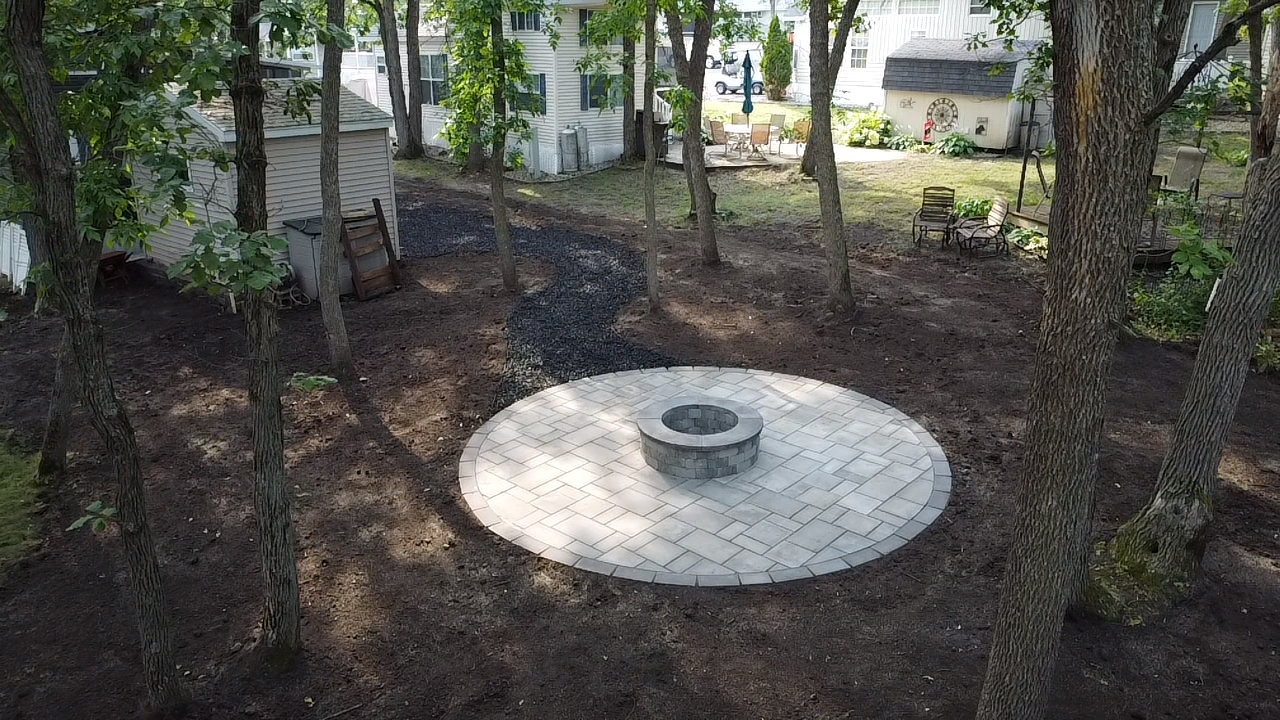
What Goes Into A Hardscape Installation
You'll see the crew mark the area with stakes and spray paint, then excavate to the depth needed for a compacted gravel base, which typically ranges from six to eight inches depending on soil conditions and the size of the project. The base is leveled and compacted in layers using a plate tamper, and edge restraints are installed to keep pavers from creeping outward over time. Each paver is set by hand, and joints are filled with polymeric sand that locks the stones together and resists weed growth and insect tunneling.
After the patio or wall is complete, you'll notice a solid, level surface with clean lines and no wobbling stones, and water will drain away from the patio rather than pooling on top. Retaining walls will hold soil firmly in place and show no signs of bulging or leaning, even after freeze-thaw cycles. OnSite Property Services can integrate steps, lighting, or decorative capstones into the design, and the finished hardscape will complement existing landscaping and structures.
Hardscape installation does not include grading adjustments beyond the immediate project area, and it does not include landscaping, irrigation, or electrical work unless specifically arranged. The crew will compact the soil behind retaining walls and backfill with gravel to support drainage, and they'll clean up construction debris before leaving. If your project requires coordination with underground utilities or drainage systems, that work needs to be completed before paver installation begins.
Homeowners often ask about design options, installation timelines, and how hardscaping holds up through winter conditions.
Common Questions About Pavers And Retaining Walls
How long does a paver patio installation take?
Most residential patios are completed in two to four days depending on size, site conditions, and whether the project includes steps, walls, or complex patterns.
What keeps retaining walls from leaning over time?
Proper base preparation, compacted gravel backfill, and drainage systems prevent water pressure from building up behind the wall, which is the main cause of shifting and failure.
Why use pavers instead of poured concrete?
Pavers allow individual stones to shift slightly with freeze-thaw movement without cracking, and damaged stones can be replaced without removing the entire surface.
Can pavers handle West Fargo winters?
Pavers installed over a well-compacted base with proper drainage perform well through freeze-thaw cycles, and polymeric sand in the joints resists erosion from snowmelt and spring runoff.
How tall can a retaining wall be built?
Most residential walls range from two to four feet, but taller walls may require engineering, permits, and additional reinforcement depending on soil conditions and local codes.
If you want to add a patio, manage a slope, or create defined outdoor areas that hold up year after year, contact OnSite Property Services to plan a hardscape project that fits your property and goals.