
Open Your Soil and Let Roots Breathe Again
Aeration in West Fargo for lawns with heavy foot traffic showing thin turf and standing water
OnSite Property Services provides professional core aeration and overseeding across West Fargo to restore lawn health and promote thicker, more resilient turf. If your lawn stays thin in high-traffic areas or puddles form after rainfall, compacted soil may be preventing proper root growth and water absorption. Even with regular mowing, fertilizing, and watering, your lawn cannot thrive if nutrients and moisture cannot reach the root zone.
Core aeration removes small plugs of soil throughout the lawn, creating channels that allow air, water, and nutrients to penetrate deeper into the soil. This process is often paired with overseeding, which introduces new grass seed into the freshly aerated soil, helping fill in bare spots and improve overall lawn density.
Soil compaction develops naturally over time, especially in areas with heavy foot traffic or clay-heavy soil, which is common in the region. Compacted soil reduces pore space and limits oxygen in the root zone, causing roots to remain shallow and more susceptible to heat and drought stress. Aeration loosens the soil by extracting plugs two to three inches deep, improving soil structure and encouraging deeper, stronger root growth.
If your lawn feels hard underfoot or water runs off instead of soaking in, core aeration and overseeding can restore the conditions your lawn needs to grow thick, healthy, and green.
What Core Aeration Removes and What It Leaves Behind
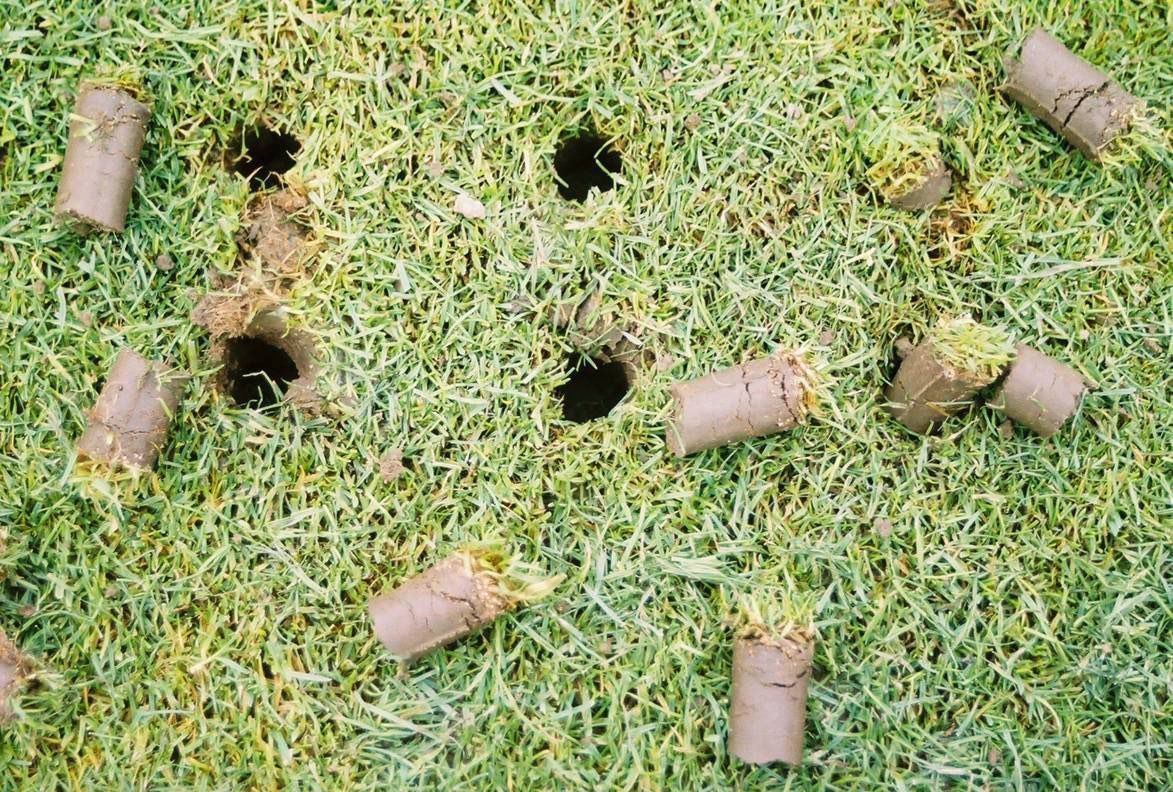
You watch as a core aerator rolls across the lawn, with hollow tines punching into the ground and ejecting soil plugs onto the surface. The plugs are left in place to break down naturally, returning organic matter and microbes back into the turf. Holes are spaced a few inches apart in a grid pattern, with each pass creating hundreds of openings that relieve pressure and improve porosity.
After aeration, you notice water absorbing quickly instead of pooling, and fertilizer applications deliver nutrients into the soil rather than washing away. The lawn may look dotted with soil cores for a week or two, but those plugs disintegrate with mowing and rainfall, and new grass growth fills in around aeration holes as roots take advantage of loosened soil. OnSite Property Services times aeration during active growth periods so turf recovers fast and benefits immediately from improved soil conditions.
Aeration works best when soil moisture is moderate. If the ground is too dry, tines cannot penetrate deeply, and if it is saturated, plugs come out as mud that smears rather than opening clean channels. The service is often combined with overseeding, which places new seed directly into aeration holes where it contacts soil and has the best chance of germination.
Homeowners want to know how often aeration is needed, what equipment is used, and whether it makes sense to aerate every lawn or only those showing visible problems.
What Property Owners Ask About Aeration
What does a core aerator actually pull out?
Hollow tines remove cylindrical plugs of soil and thatch roughly half an inch wide and two to three inches deep, leaving open holes that break up compaction and allow roots to grow into newly available space.
How soon does the lawn look normal again?
Soil plugs dry and crumble within one to two weeks depending on rainfall and mowing frequency, and grass blades grow over aeration holes as roots expand into loosened soil.
When is aeration most effective in West Fargo?
Late spring or early fall during active turf growth gives grass time to recover and fill in, and aerating when soil is moist but not saturated ensures tines pull clean cores without tearing turf or compacting soil further.
Why does aeration help lawns handle drought better?
Deeper root systems access moisture stored lower in the soil profile, and improved water infiltration prevents runoff and keeps the root zone hydrated longer between watering cycles.
What happens if you aerate too often?
Excessive aeration disrupts root systems and creates unnecessary stress, so most lawns only need service once per year, with high-traffic areas or heavy clay soils sometimes benefiting from twice-yearly passes.
OnSite Property Services evaluates soil condition and turf density before recommending aeration frequency, so your lawn gets the service it needs without overdoing it. Contact the team to schedule aeration and give your turf room to grow.