
Remove the Layer That Blocks Your Lawn's Root Zone
Dethatching in West Fargo for lawns that stay wet on the surface but dry out underneath
OnSite Property Services offers dethatching throughout West Fargo to restore access between your turf and the soil below. You water regularly and apply fertilizer on schedule, but if the lawn feels spongy underfoot and new growth stays thin, a thick thatch layer is blocking everything you apply from reaching the root zone. Dethatching pulls out the compressed mat of dead stems, stolons, and clippings that accumulates when organic matter builds faster than it decomposes, opening channels so water and nutrients can move into the soil again.
Thatch develops naturally, but when the layer exceeds half an inch, it starts to act as a barrier. Roots grow horizontally through the thatch rather than extending into the soil, which leaves turf vulnerable to heat stress and drought. Fungal activity increases in the damp, airless mat, and insects find shelter in the dense material. Dethatching removes that buildup mechanically, using tines or blades that lift and tear the layer without damaging the living grass above or the soil below.
If your lawn looks dull despite regular care or water puddles on the surface instead of soaking in, dethatching may be the reset it needs.
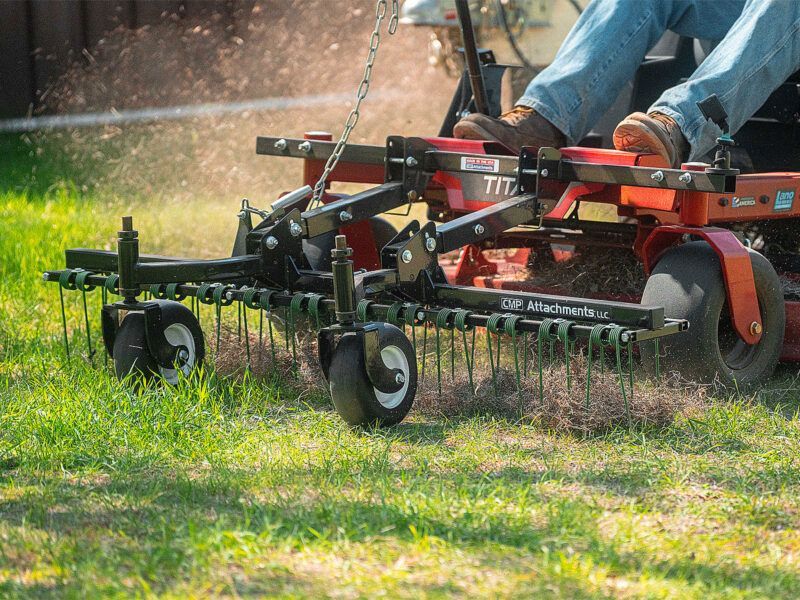
How Dethatching Equipment and Timing Work Together
You watch as a power rake or vertical mower is passed over the lawn in multiple directions, with rotating tines pulling thatch up to the surface. The depth is set carefully so tines penetrate the thatch layer without gouging soil or tearing living grass crowns. Material comes up in thick piles that are raked and removed, leaving the lawn looking rough initially but with soil exposure visible between grass plants.
After dethatching, you notice water soaking in faster and fertilizer reaching the root zone instead of sitting on top of dead material. The lawn may look thin for a week, but new growth fills in quickly once roots access moisture and nutrients directly. OnSite Property Services schedules dethatching during active growth periods in late spring or early fall, so turf recovers rapidly and takes advantage of improved soil contact.
Dethatching is not needed every year. Lawns with slow thatch buildup may only require service every few years, while high-maintenance turf types or properties with heavy irrigation may benefit from more frequent dethatching. The service is often paired with aeration or overseeding to maximize recovery and long-term turf density.
Property owners want to know how much disruption dethatching causes, whether it can be done on any grass type, and what happens to the material that gets pulled up.
Common Questions About Thatch Removal
What does thatch look like when it becomes a problem?
You see a spongy layer when you press into the turf, and if you pull back grass blades, a tan or brown mat sits between green growth and soil, often holding moisture on top while the ground below stays dry.
How is dethatching different from raking?
Raking removes surface debris like leaves, while dethatching uses mechanical tines to pull matted organic material from below the grass canopy where it compresses against the soil.
When should dethatching happen in West Fargo?
Late spring after turf greens up or early fall before temperatures drop allows grass to recover quickly, and dethatching during active growth minimizes stress and encourages new root development.
Why does the lawn look worse right after dethatching?
Tines tear up dead material and expose soil, leaving temporary gaps and a rough appearance, but healthy turf rebounds within two weeks as roots access nutrients and water without obstruction.
What gets removed during the process?
Dead grass stems, shallow roots, clippings, and decomposed plant matter are lifted and hauled away, leaving bare soil visible in places where thatch once blocked light and airflow.
OnSite Property Services assesses thatch depth before starting work and adjusts equipment settings to match your turf type and soil condition. Reach out to schedule dethatching and give your lawn a clear path to stronger growth.